
Insights
From the brilliant and bold mind of Rich Galgano, these insights are meant to inspire, educate, and empower. Rooted in his personal experiences and professional journey, each blog provides thoughtful guidance on business strategies, personal development, and overcoming challenges. Whether you're looking to elevate your career, navigate life’s complexities, or simply gain a fresh perspective, these articles are crafted to help you achieve your goals.
Insights Categories
Code Yellow
Most sales conversations fail long before anyone raises their voice or digs in their heels. Not because people disagree. But because they are talking about different things. That distinction matters more than most people realize. When a conversation breaks down, the assumption is usually conflict. Objections. Resistance. Pushback. In reality, what is happening far earlier and far more often is misalignment. One person is thinking about price. Another is thinking about career risk. Another is thinking about internal politics. Another is thinking about timing. No one is wrong. No one is arguing. They are simply operating on different mental maps. And when people are navigating different terrain in their heads, communication breaks without anyone noticing why.
How metaphors orient people, reduce resistance, and create movement without pressure in sales and decision-making.

Most sales conversations fail from misalignment, not disagreement. How metaphors create shared understanding and coordination.

People do not resist ideas. They resist what those ideas imply. Why metaphors lower resistance and create movement.

Why metaphors are a practical tool for situational awareness, judgment, and decision-making in sales.

The single question elite operators ask to see situations clearly and move people toward outcomes with judgment and awareness.

Why “Always Be Closing” fails and how Code Yellow replaces force with awareness, timing, and disciplined thinking.
Reading the room is not a talent. It is earned intuition built through preparation, observation, and awareness under pressure.

Code Yellow is not hype, pep rallies, or positive thinking. It is real-time awareness under pressure and knowing when to act.

Most salespeople don’t fail because they’re “always trying to close.” That’s a lazy diagnosis. Most of them don’t even know how to close. They fail for a more fundamental reason: They have no idea what pitch is coming.
Quick Read

I didn’t get into sales because I read a book or watched a YouTube guru. I got into sales because on day one, at my first job, I paid attention to what mattered. That job? Foot Locker. I’m a teenager. Just a kid sent to work in the back, stocking shoes. It’s Saturday morning, store’s packed, and I’m in the back doing what I was told—stacking boxes, putting away sizes nobody asked for. All of a sudden, the manager, Steve, walks in, he looks at me and says, “Can you sell shoes?” Now, what kind of question is that? I don’t know if I can sell shoes—I’ve never done it. But I sure as hell know I can figure things out. So I step out onto the floor. I look around. Chaos. Parents, kids, teenagers—everyone grabbing shoes off the walls like it's Black Friday. Then I see it. A woman. Standing there with a shoe in her hand. She’s holding it up in the air like she’s raising a flag. What the fuck do you think that means? She needs help. Nobody had to explain that to me. Nobody handed me a training manual. I didn’t have a playbook or a headset whispering directions in my ear. I saw a customer. I saw a need. I went. That’s instinct.
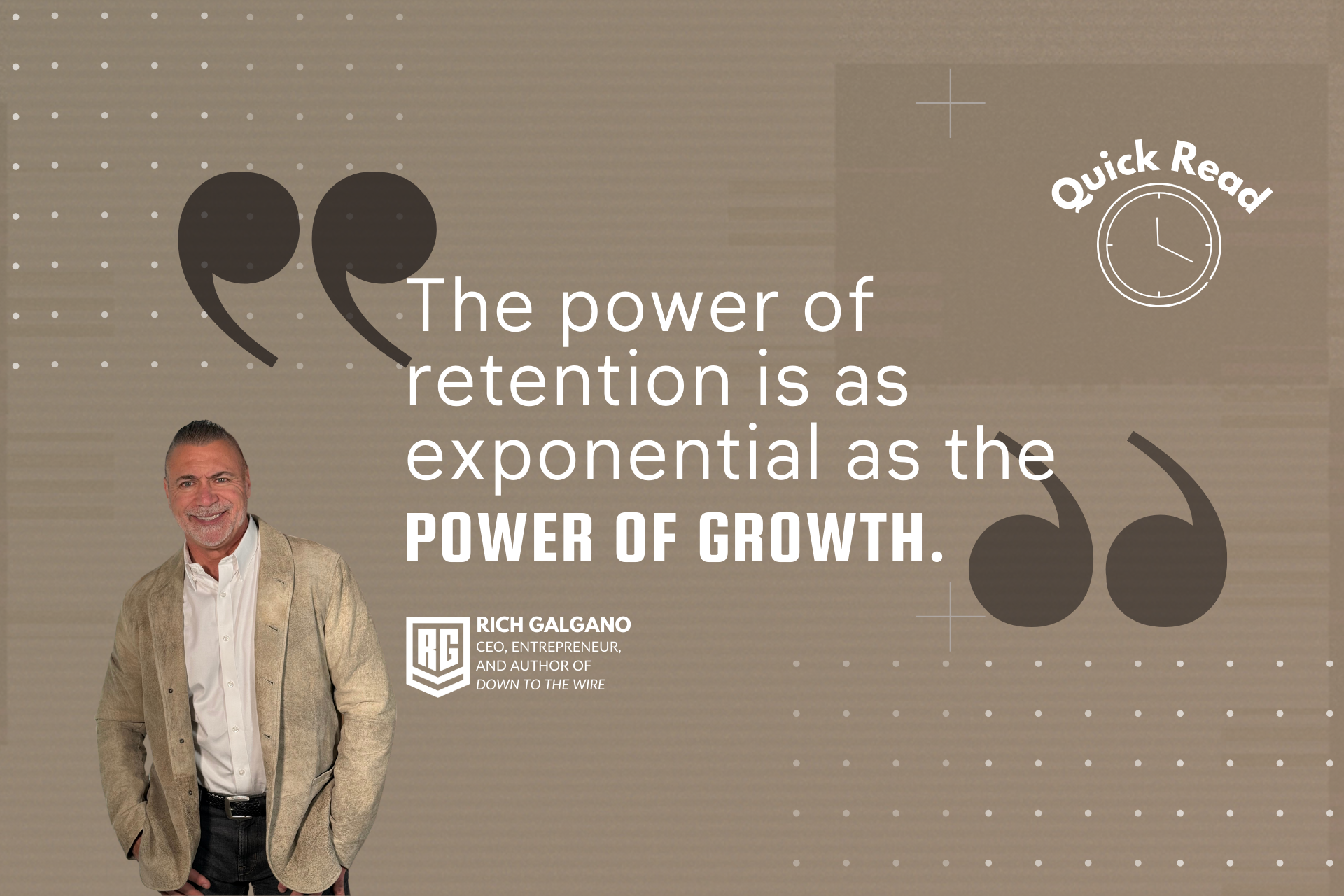
While I did pull this quote out of thin air, "The power of retention is as exponential as the power of growth" has defined my career. It stems from my attain, retain, and attain again (ARA) strategy. Back in 2005, during a conversation with Seidler Equity Partners, I coined the ARA phrase while explaining how Windy City Wire achieved eleven consecutive years of EBITDA growth (now going on 31 years!). This philosophy became the cornerstone of how we operated—shaping both our business strategy and our culture.

People aren’t mind readers. Prospects, customers, and colleagues may not fully understand your value, uniqueness, expertise, or credentials unless you communicate them clearly. If you don’t share the details that matter, they are likely to go unnoticed—particularly by the people who would benefit from knowing them. But it’s not just about what you say—how you say it matters just as much. Being direct doesn’t mean being abrasive. Thoughtfulness and framing are just as crucial as clarity. The difference between closing a deal, influencing your audience, or alienating a prospect often hinges on how well you balance clarity with tact.

It all started during a business training session I held for a group of young adults, many of whom were athletes. I was working to connect the dots between the world of sports and business and sales.
Sales Guide

In business, just like in life, every conversation we have, every question we ask, every statement we make, is a move—a play. Each of these plays serves as an IQ test. I'm not talking about your standard intelligence quotient here; I'm referring to something broader and more practical—Intelligence, Intuition, Quotation. It's a simple concept but packs a lot of punch. Let's break it down.

Sales isn’t about having the best pitch or the best product. It’s about how you frame the conversation. Because the reality is this—it’s not what you say, it’s how you say it. What’s framing? It’s the ability to take one single idea and say it five different ways until you land on the one way that gets the response you want. ✔ It’s not just about asking questions. It’s how you ask them. ✔ It’s not about selling a solution. It’s how you present it. ✔ It’s not about being right. It’s about making them feel like they made the right choice.
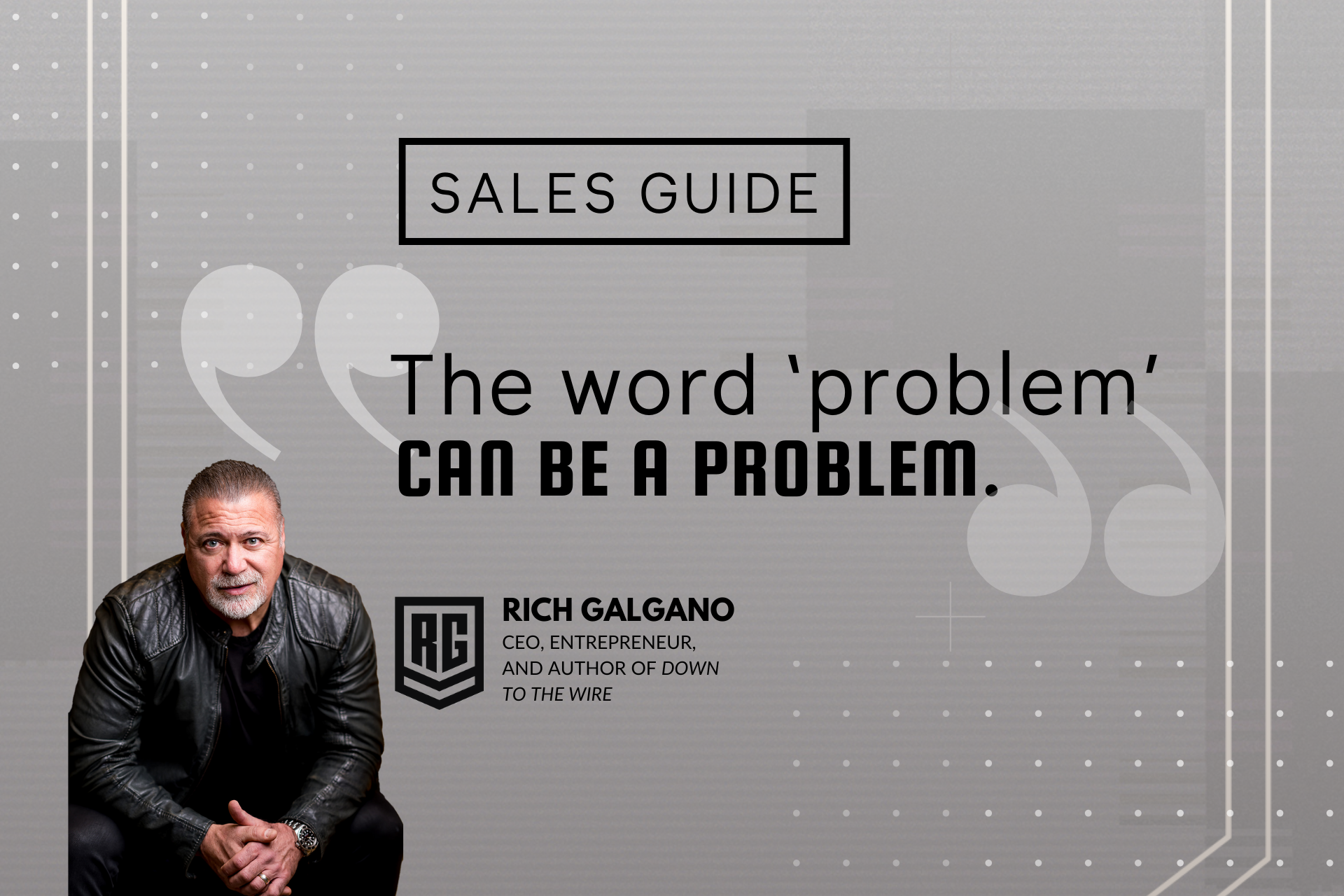
"The Word 'Problem' Can Be a Problem": A Guide to Focusing on Enhancement Instead of Problem-Solving
In life and work, we often hear that pushing hard and hustling are the keys to success. But what if true strength and achievement lie not in extremes but in balance? My quote "Do we falter in the face of excess, or crumble from neglect? I believe the balance between overtraining and undertraining is where our true strength is tested."
Tips
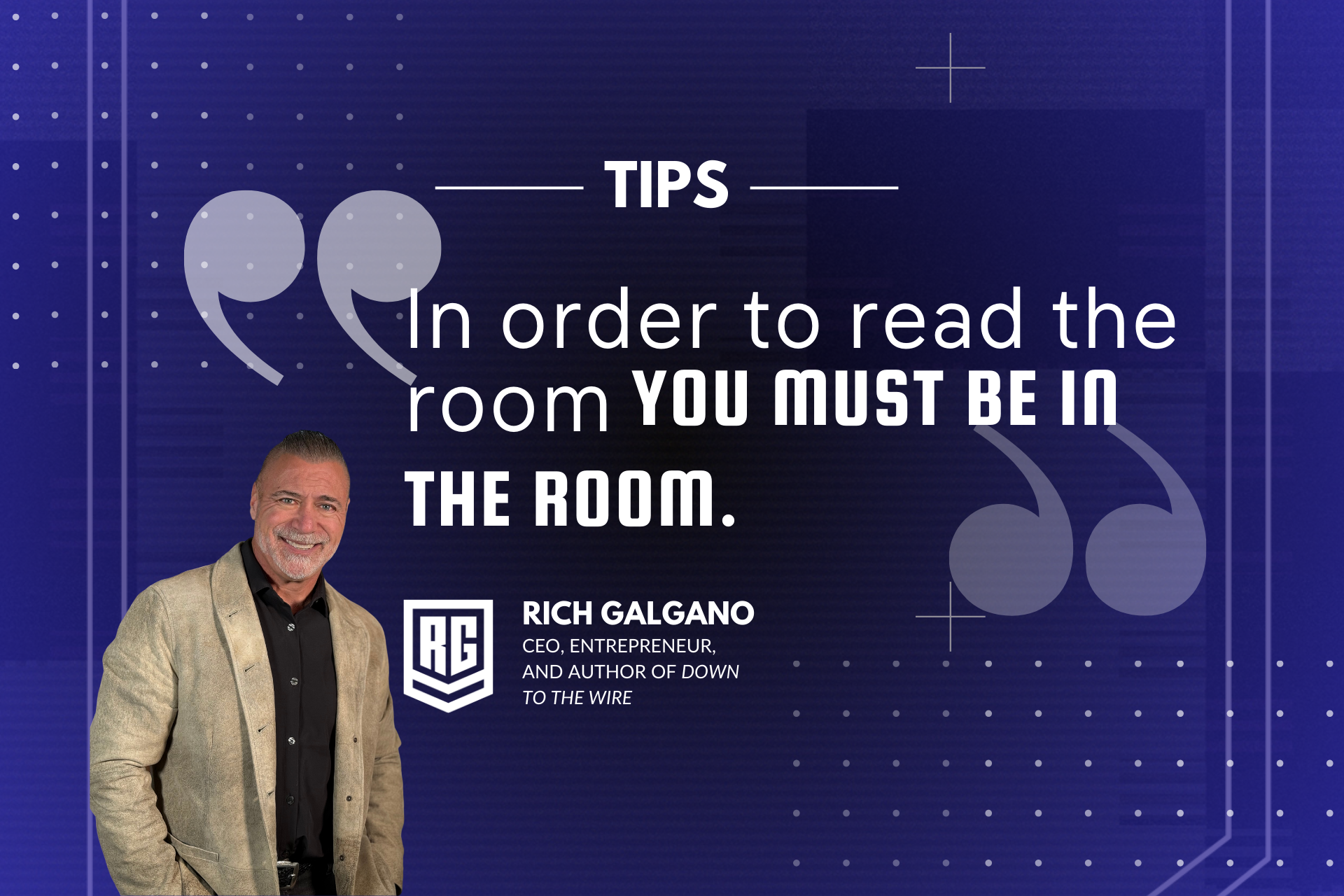
We’ve all heard the saying, “If you never ask for a dance, you’ll never dance.” The same idea applies to being in the room. You can’t read it, you can’t influence it, and you certainly can’t own it if you’re not even there. To be in the room, you have to put yourself out there. You have to seek the invitation, show up, and be ready to make your mark. It’s about taking that first step with confidence, even when the odds might seem against you.

Problem-solving isn’t just a skill—it’s a defining trait. It’s the ability to assess a situation, break it down logically, and find solutions, even when the answers aren’t obvious. Problem-solving requires persistence, resourcefulness, and creativity—qualities that are becoming increasingly rare. Many people today struggle with critical and logical thinking. They hit a roadblock and stop, unable to answer the fundamental question: How do I solve this issue? This isn’t about blame—it’s about recognizing a gap in our collective skill set and addressing it. In today’s world, the most valuable skill you can offer an employer is the ability to solve problems effectively. When you demonstrate that capability, you can instantly become an asset.

If y ou can’t get to the point, what are you really doing? Time is often your most valuable currency—it’s a reflection of respect. Respect for your target’s time, respect for your own time, and respect for the opportunity you’ve been given to sit in that room. That’s why I drill this into my sales team: “Get to the point or get out of the room.” Rambling or circling around your point invites your target to mentally check out. Dragging things out isn’t just inefficient—it can show a lack of preparation and respect. When you waste someone’s time, you’re often sending a clear message: “I’m not ready,” or worse, “I don’t value your time.” Once you lose their attention, it can be very difficult to get it back. If you’re not clear, concise, and intentional, you risk not just failing to communicate but also undermining the opportunity. That's why getting to the point isn’t optional. It’s mandatory.
My Two Cents

In this episode of My Two Cents, I recount a sales interaction that started off promising—I truly believed the woman I was dealing with was situationally aware. But just as she had me on the hook, she made a fatal mistake: she started telling me what to do, completely losing all awareness in the process. The deal was dead on the spot. If she had followed my Doctrine of Code Yellow, the outcome could have been very different. Tune in to hear how a single misstep can cost you a sale—and how staying aware can make all the difference.

Welcome to My Two Cents—a brand-new segment where I share my thoughts, insights, and no-nonsense advice on sales, business, life, and everything in between. In each episode, I'll be breaking down real-world experiences, lessons learned, and practical tips to help you navigate challenges, seize opportunities, and level up in whatever you do. No fluff, just straight talk.